 RAJA
RAJAWeb App · 2023
Folio CMS
Rethinking content publishing for editorial teams at scale.
Problem
Editors juggled four tools to publish a single article, averaging 3.5 hours per piece.
Solution
One progressive-disclosure CMS with unified drafting, staging, and publishing.
Outcome
Publish time dropped 35% and the team consolidated four tools into one.
Impact
Context
Folio Labs needed a CMS that could handle complex editorial workflows — multi-author drafts, staged publishing, rich media embeds — without the cognitive overhead of legacy tools. I owned UX from discovery through handoff.
Research
Twenty interviews and a full journey map exposed 14 distinct pain points. A competitive scan of 8 platforms surfaced best-in-class patterns for each workflow stage.
"I don't want a better editor. I want to stop bouncing between four tabs just to publish."
The Challenge
The existing workflow required editors to jump between 4 different tools to publish a single article. Context switching was constant, version control was manual, and the publishing process averaged 3.5 hours per piece. The team needed a unified, intuitive platform.
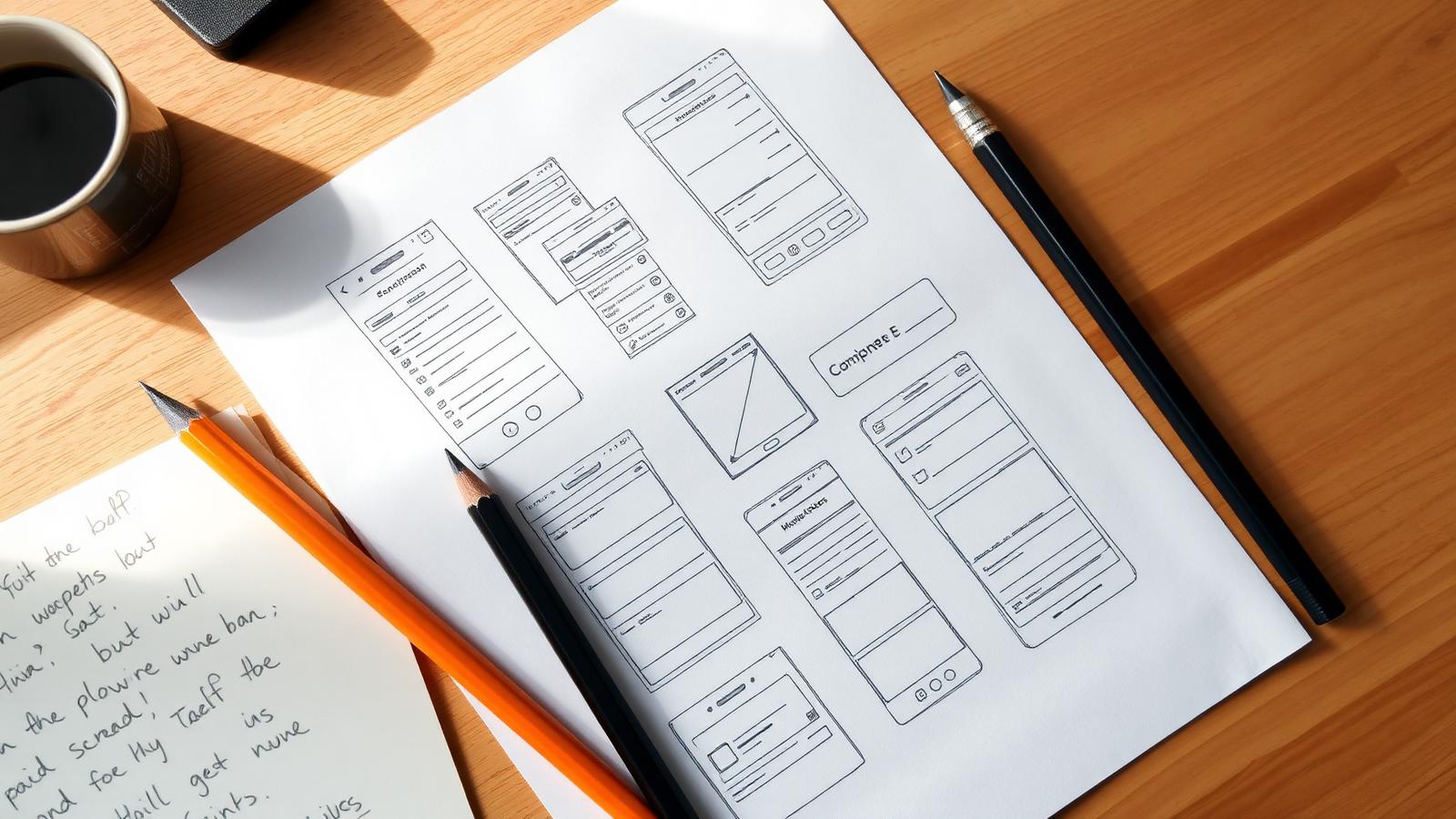
Early-stage flow mapping and wireframe sketches from the discovery phase.
Decisions
The choices that shaped the work — what we did, why, and what it changed.
Progressive disclosure by default
Serve novices and power users without two products — surface complexity only when invoked.
Outcome — Onboarding shortened; power users kept their depth.
Unify drafting, staging, publishing
Four tools → one surface. Eliminate the context switching tax.
Outcome — Publish time fell 35% in pilot.
Test the editor in three rounds
The editor is the product. Iterate the toolbar, sidebar, and publish flow with real editors.
Outcome — Shipped with high confidence and minimal post-launch churn.
Timeline
- Phase 1
Discovery
20+ interviews, journey map, 14 pain points.
- Phase 2
Architecture
Progressive disclosure IA; competitive scan.
- Phase 3
Prototype
Three test rounds of the core editor.
- Phase 4
Spec & handoff
Edge cases, empty states, responsive specs.
Principles
- 01Listen before you design.
- 02Workflow over feature.
- 03Simple by default, powerful on demand.
Reflection
"The most valuable thing I did on this project was spend the first two weeks just listening. The team thought they needed a better editor. What they actually needed was a better workflow. The design followed from that insight — not the other way around."
← Previous
Odin AI